


In today’s world, it’s easy to feel swept up by the pull of advertisements, sales, and the constant allure of something new. Yet, as the holiday season approaches, we have a perfect opportunity to practice gratitude and mindful spending. When we focus on being thankful for what we already have, we’re less likely to fill our lives with things we don’t truly need. Here’s how cultivating gratitude can keep us grounded and help us make thoughtful spending choices.
Why Gratitude Matters in Spending
Gratitude helps us pause, reflect, and appreciate what we already possess, making us less susceptible to the urge for instant gratification. Studies show that people who practice gratitude regularly report higher levels of contentment, which can lead to healthier spending habits. By recognizing the abundance in our lives, we reduce the need to seek happiness through material items.
Think about the last time you felt the impulse to buy something on a whim. Maybe it was an ad on social media, a special sale, or a shiny new product in the store. Did you pause to consider if it was something you truly needed or something that aligned with your values? A little gratitude can go a long way toward avoiding purchases that ultimately don’t add value.
Practicing Mindful Gratitude Before You Spend
Here are some ways to bring gratitude into your spending habits:
1. Take Inventory of What You Have
Before making a purchase, take stock of what you already own. Sometimes, the excitement of buying something new fades when you realize you have similar items that serve the same purpose.
2. Reflect on Recent Wins
Did you reach a recent financial goal or make a smart saving choice? By celebrating these accomplishments, you reinforce the joy of intentional financial decisions, which can curb the need for quick purchases.
3. Practice the “Pause”
When you feel the urge to buy something, try a gratitude exercise: think of three things you’re grateful for in your life right now. Often, this moment of reflection can shift your perspective and lessen the impulse to spend.
4. Be Grateful for Your Resources
Appreciate the time, energy, and money you have worked hard to earn. Spending mindfully means treating your resources with respect, which helps you make more thoughtful financial choices.
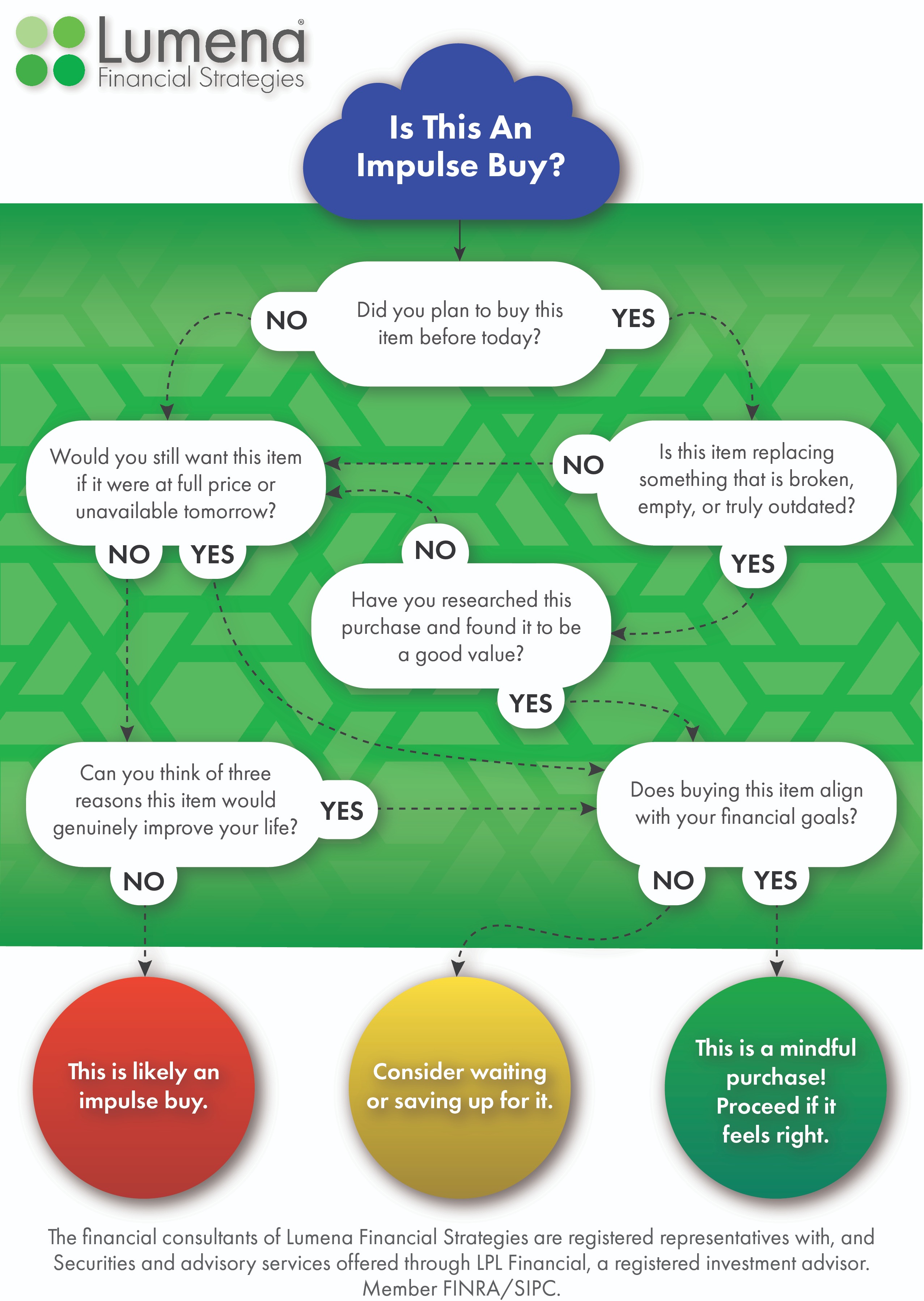
Decision Tree: Is This an Impulse Buy?
Use this Decision Tree to evaluate whether a potential purchase aligns with your values and needs. This exercise will guide you through questions to decide if the item is worth buying or if it’s simply a fleeting impulse. If you land on yellow, consider waiting 2-4 weeks before revisiting the decision. This pause gives you time to reflect and make a more thoughtful choice.
Wrapping Up
Mindful spending isn’t about deprivation—it’s about making choices that honor what you already have and what truly adds value to your life. Practicing gratitude can remind us of what’s important, helping us see that true happiness isn’t for sale. As you consider each purchase, use this decision tree as a guide, and let gratitude help you make thoughtful financial decisions this season.